

Keep VAT check records with your billing records.
Review earlier findings with their original dates and limitations, while the records remain available under your retention and access terms.
No card required. Live availability varies by country, check and account access.
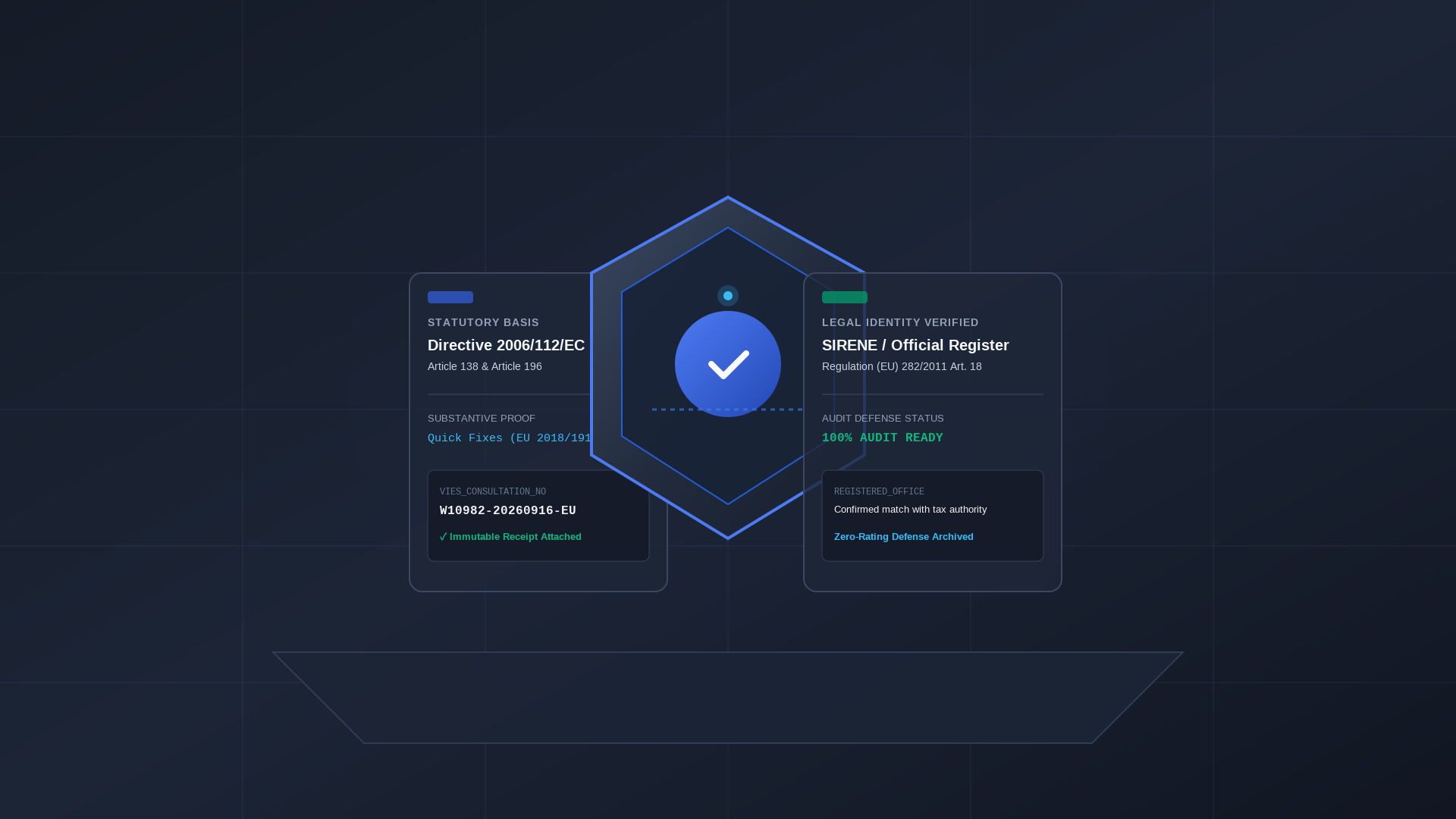
Earlier findings need their original context
When you review a past check, you need to know when the data was observed and which questions the result answered.
- A check today does not prove VAT status on an earlier invoice date.
- Plan history limits do not guarantee permanent access to every result.
Review the available record
Use saved findings with their original observation dates and limits. Current source-use, disclosure, access and retention rules apply to historical records and exports.
- Keep dates with findings
Opening a saved record does not run a new check or create a new observation date.
- Review the record scope
A saved VAT or company result does not guarantee an audit outcome or establish the tax treatment of a sale.
Know what the result confirms
Reopening or exporting a saved check preserves its original observation date without running a new consultation. Service retention windows follow your plan and source-rights limits, not statutory archiving rules.
We name only reviewed government services for the fields they support; other permitted sources remain anonymous categories and represent partial data correlation. Saved records keep their original observation dates under current disclosure, access and retention rules.
Read how check records workReview customer details before billing.
Create a free account to explore sample results and the checks available to your business. Live availability varies by country, check and account access.